Consumption Rather Than Investment the Main Driver for Digital Loans Appetite
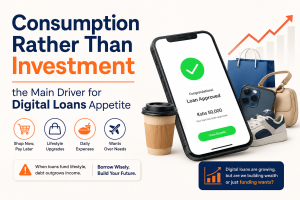 In an economic climate where job creation remains sluggish and household incomes are stretched thin, digital loans have become an indispensable cushion for millions of Kenyans. This reliance has fuelled massive growth in the fintech sector. Industry data from the Digital Financial Services Association of Kenya (DFSAK) reveals an eye-watering average of Kshs 500 million borrowed every single day.
However, the vast majority of these funds are spent on immediate consumption rather than wealth creation.
Borrowing to Stay Afloat, Not to Grow
Findings from Tala’s Money March 2026 report highlight a concerning trend: short-term loans are increasingly serving as income stabilizers rather than catalysts for growth.
- Income Supplementation: 46% of borrowers use loans simply to supplement their regular earnings—a 3% uptake from the previous year.
- Labour Market Shifts: While full-time employment is declining in favor of business ownership, fewer individuals are able to maintain side hustles due to mounting financial pressures and diminished flexibility.
- Cost-of-Living Crunch: Surging inflation is forcing households to trade long-term financial goals for short-term survival necessities.
Interestingly, the Kenya National Bureau of Statistics (KNBS) 2026 Economic Survey showed a slight rebound in real average earnings—rising 2% in 2025 (to Kshs 678,795/-) after a 0.3% drop in 2024. Yet, despite this modest improvement, consumer-focused micro-lending remains the path of least resistance for digital platforms.
The Pivot Toward Asset Financing and Economic Enablers
To build a more sustainable business model, forward-thinking lenders are pivoting away from pure consumption loans toward productive asset financing.
Leading players like Watu Africa and Mogo Kenya are focusing on financing tools that directly generate income—such as motorcycles, three-wheelers, and smartphones.
Key Impact Metrics:
- Watu Africa: In 2024 alone, Watu funded over 80,000 income-generating assets and facilitated the purchase of 1.4 million smartphones.
- Kenya: 40% of WatuSimu users reported a boost in income after acquiring a smartphone, with 30% accessing new employment and 12% launching digital businesses.
- Regional Impact: In Tanzania, 64% of users saw significant earnings growth, while 54% in Uganda reported higher incomes after leveraging smart technology for work.
- Mogo Kenya: Has injected more than Kshs 44 billion into the local economy over seven years, empowering over 500,000 Kenyans through productive asset ownership.
This model taps directly into vital economic drivers. According to Viffa Consult, Kenya’s boda boda (motorcycle taxi) sector generates roughly Kshs 660 billion annually—contributing 4.4% to the national GDP and sustaining over 2.5 million livelihoods.
“Behind each number is a story—a bodaboda rider who can now own rather than rent their motorcycle, a small business owner who gained access to digital opportunities through a smartphone, or a woman entrepreneur breaking barriers,” noted Andris Kaneps, founder of Watu Africa, in the firm’s 2025 Sustainability Report.
Regulatory Reckoning: Curbing Over-Indebtedness
Despite these success stories, rapid credit expansion without adequate affordability checks has led to widespread over-indebtedness. In response, Kenyan regulators are stepping in to enforce stricter lending standards.
Jointly championed by major regulatory bodies—including the Central Bank of Kenya (CBK), Communications Authority (CAK), SASRA, IRA, Competition Authority (CAK), and RBA—the proposed Financial Consumer Protection Framework aims to stop predatory and reckless lending practices.
Core Provisions of the New Draft Framework:
- Mandatory Affordability Assessments: Financial Service Providers (FSPs) must verify a borrower’s genuine capacity to service a loan without experiencing financial distress before issuing credit or expanding credit lines.
- Suitability Checks: Lenders must ensure credit products directly match the consumer’s financial objectives and capabilities.
- Early Intervention for Debt Distress: Prior to taking legal or recovery action, lenders must proactively offer remedies to struggling borrowers, such as:
- Extending loan repayment terms.
- Applying temporary payment pauses or “repayment holidays.”
- Reducing annual percentage rates (APR).
- Restructuring, consolidating, or partially forgiving debt.
This regulatory shift signals a major transition for Kenya’s digital finance ecosystem: moving away from high-friction, high-interest consumer credit toward responsible, affordability-driven, and value-generating financial services.
Credit access should not come at the cost of financial distress.
Recognising the growing gap between access to credit and affordability, Debtors Care Limited was established to help individuals and organisations navigate debt, make better credit decisions, and manage debt sustainably.
Are you struggling with debt or concerned about your credit decisions? We can help.
Visit www.debtorscare.co.ke to learn more about our services or email us at info@debtorscare.co.ke to start a conversation.
Better credit decisions. Sustainable debt. Better financial outcomes.