

What CMA’s Warning on Special Funds Means for Your Investments
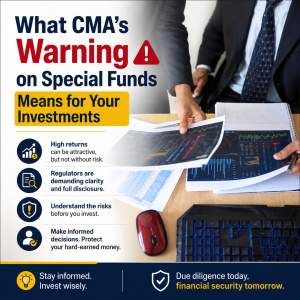 The allure of high investment returns is hard to resist, especially at a time when inflation and the rising cost of living continue to erode the value of everyday savings. It is no surprise that many investors are seeking alternatives that promise returns above those offered by bank deposits, Money Market Funds (MMFs), or government securities.
However, according to a Business Daily news article published today, Kenya’s Capital Markets Authority (CMA) is raising concerns about how these investment opportunities are being marketed. The regulator reportedly held a closed-door meeting on 2 July 2026, seeking clarifications and full disclosures from fund managers regarding the highly publicized returns being promoted to investors.
The scrutiny comes as special funds continue to attract significant interest from retail investors. According to the CMA’s latest Collective Investment Schemes Report, special funds had grown to a record Kshs. 203.5 billion as of March 2026, accounting for 23.9% of the unit trust market. While this rapid growth reflects strong investor appetite, it has also prompted the regulator to issue serious warnings over aggressive and potentially misleading marketing practices.
If you’re looking to grow your wealth beyond conventional Money Market Funds (MMFs), here’s what’s happening behind the scenes and what you must watch out for before handing over your hard-earned cash.
Why Are Special Funds Under Fire?
Unlike standard MMFs or fixed-income funds, special funds enjoy wide flexibility. They can invest in high-risk, high-reward assets like private debt, real estate, offshore equities, and commodities.
That flexibility isn’t inherently bad, but it creates room for irregular marketing practices.
Regulator concerns include:-
- Influencer-Driven Hype: Promoters and social media influencers highlighting headline returns while ignoring risk disclosures.
- Annualized Trickery: Multiplying short-term performance spikes to make a fund’s annual yield look unrealistically lucrative.
- Concealed Losses: Concerns that fresh investor inflows might be used to smooth over quarterly market losses or portfolio devaluation.
4 Big Red Flags Investors Should Be Wary Of
Before committing capital to any high-yielding special fund, keep these critical warning signs on your radar:
- High Returns with Zero Mention of Risk:- In financial markets, risk and return are twins—you cannot have one without the other. If an investment pitch focuses solely on guaranteed double-digit returns without explaining where the yield comes from (e.g., real estate loans or private debt), walk away.
- High Hidden Fees Eat Your Profits:- Some special funds charge annual management fees of up to 6%, along with steep performance fees when targets are met. High fee structures can quietly wipe out a substantial chunk of your actual real return. Always ask for a full schedule of fees upfront.
- Liquidity Locks and Withdrawal Delays:- Fixed income and money market funds allow quick access to your cash, but special funds often hold illiquid assets. If a fund invests heavily in real estate or private debt, getting your money back during market downturns can take months—or longer.
- Unlicensed Promoters or Unapproved Entities:- The strongest protection you have is regulatory oversight. Unlicensed entities operating via messaging channels or flashy online dashboards carry zero legal recourse if the scheme collapses.
How to Protect Your Money
- Verify Before You Verify Again:- Always check the official CMA Portal to confirm if both the fund manager and the specific sub-fund are fully registered.
- Read the Information Memorandum:- Don’t rely on social media graphics. Read the trust deed and prospectus to understand asset allocation, lock-in periods, and liquidity terms.
- Ask the Tough Questions:- Ask the fund manager how assets are valued, what happens during market stress, and whether returns are net of all fees.
Seeking higher yields is a smart move, but only when you understand what’s under the hood. Don’t let a slick marketing pitch blind you to the underlying risks!