

The Hidden Cost of Convenience: What Every Kenyan Must Watch Out for When Taking Digital Loans
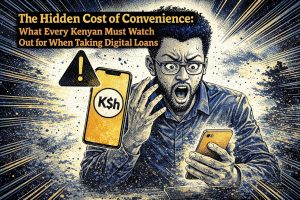 The Silent Spiral
James, a 29-year-old boda boda rider in Nairobi, took his first mobile loan to repair his motorcycle. It was quick. Convenient. Lifesaving.
A month later, he took another loan—from a different app—to cover school fees.
Then another—to repay the first.
Within six months, James wasn’t borrowing for growth anymore. He was borrowing to survive.
James is not alone.
The Rise of Digital Lending in Kenya
Kenya has become a global leader in mobile financial services, driven by platforms like M-Pesa.
- Over 8 million Kenyans actively use digital loan apps
- Mobile loans account for a significant share of short-term consumer credit
- According to the Central Bank of Kenya, digital lending has expanded rapidly—but so has borrower distress
At the same time:
- Household disposable income is under pressure
- Cost of living continues to rise
- More Kenyans are relying on short-term credit to bridge daily gaps
The Behavioural Traps Behind Digital Debt
- Loan Stacking: The Illusion of More Options
James didn’t think it was risky—after all, each lender approved him.
But loan stacking creates a dangerous illusion:
More access to credit ≠ more financial capacity
Reality in Kenya:
- Many borrowers have 3–5 active digital loans at once
- Lenders often don’t share real-time data, enabling over-borrowing
Risk: Repayment obligations pile up faster than income can sustain.
- Rollovers: The Debt Recycling Trap
When repayment time came, James took another loan to repay the previous one.
This is rollover behaviour.
What it looks like:
- Borrow → Repay with another loan → Repeat
Impact:
- Debt grows without solving the underlying problem
- Interest and fees quietly compound
In Kenya:
This pattern is one of the leading drivers of chronic indebtedness among mobile loan users.
- Hidden Charges: The Cost You Don’t See
Many borrowers focus on the loan amount received, not the total repayment.
Common hidden costs:
- Processing fees
- Service charges
- Penalties for late payment
Some digital loans in Kenya carry effective annual interest rates exceeding 100% when fees are included.
Lesson: The true cost of a loan is not what you receive—it’s what you repay.
- Overconfidence in Future Income
James believed:
“Next month will be better.”
But income—especially in informal sectors—is unpredictable.
The mistake:
Borrowing today based on uncertain future earnings
Result:
- Repayment stress
- Increased dependence on new loans
The Bigger Picture: What This Means for Kenya
- Increased Household Vulnerability
More Kenyan households are one emergency away from financial distress.
A medical bill, school fees, or business slowdown can trigger a debt spiral.
- Rising Default Risk
As borrowing increases and incomes stagnate:
- More borrowers struggle to repay
- Negative listings with CRBs rise
This affects long-term financial access.
- Financial System Strain
High default rates impact:
- Digital lenders
- Traditional financial institutions
- Overall credit trust in the economy
The Mindset Shift Kenya Needs
The problem is not credit itself.
Credit is a tool.
But like any tool, it can build—or destroy.
From This → To This
- Reactive borrowing TO Planned borrowing
- Consumption borrowing TO Productive borrowing
- Dependency TO Financial control
Practical Reset: What Smart Borrowing Looks Like
- Borrow with a clear repayment plan
- Limit the number of active loans
- Always check the total repayment amount
- Avoid borrowing to repay another loan
- Build small emergency buffers—even KES 50 at a time
Final Thoughts: From Survival to Stability
Disposable income is shrinking.
Credit dependence is rising.
But this is not the end of the story.
The shift begins with awareness.
When borrowers understand the patterns, they can break them.
Financial stability is not built overnight—but it is built intentionally.
Closing Reflection
If you find yourself borrowing frequently, pay attention.
It’s not just a habit—it’s a signal.
A signal that something in your financial system needs adjustment.
Start small. Stay consistent. Be intentional.
Because in the end, financial freedom is not about how much you earn—
It’s about how well you manage what you have.
Not sure if your loans are manageable?
We’ll help you understand your debt, your options, and your next move.
Book your Debt Assessment Session today by clicking https://calendly.com/debtorscare/debtors-care-limited